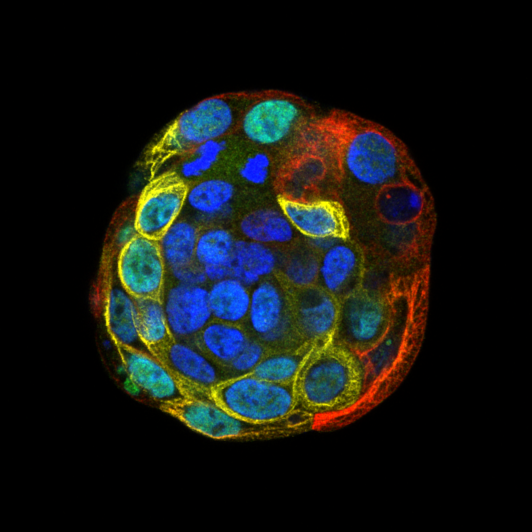
Patient-derived organoids (PDOs) are highly powerful models for disease research as they preserve patient-intrinsic molecular and cellular characteristics, such as cellular diversity, structural integrity, cell-cell interaction and transcriptional activity. Using PDOs, we bridge the gap between traditional cell culture models and clinical outcomes, offering valuable opportunities for development of more effective therapies and improved personalized medicine.
Hepatitis B virus and liver organoids
Investigating the molecular mechanisms underlying hepatocellular carcinoma (HCC) arising from different etiologies has been challenging due to the lack of suitable experimental model systems.
To address this limitation, we have established adult human liver tissue- and patient-derived organoid models and optimized protocols for their differentiation into hepatocyte-like cells. This organoid model enables long-term culture and can be differentiated into hepatocyte-like cells that support hepatitis B virus (HBV) infection and replication. Furthermore, they provide a robust platform for antiviral drug screening and for investigating the molecular mechanisms underlying HBV-induced liver pathogenesis. Beyond HBV-associated liver disease, this organoid platform offers opportunities to investigate other major etiologies of HCC, particularly metabolic dysfunction-associated steatotic liver disease (MASLD).
By modeling disease-associated conditions, we aim to identify molecular mechanisms underlying HCC development associated with different etiologies, facilitate the identification of early biomarkers, and potentially reveal novel therapeutic targets.
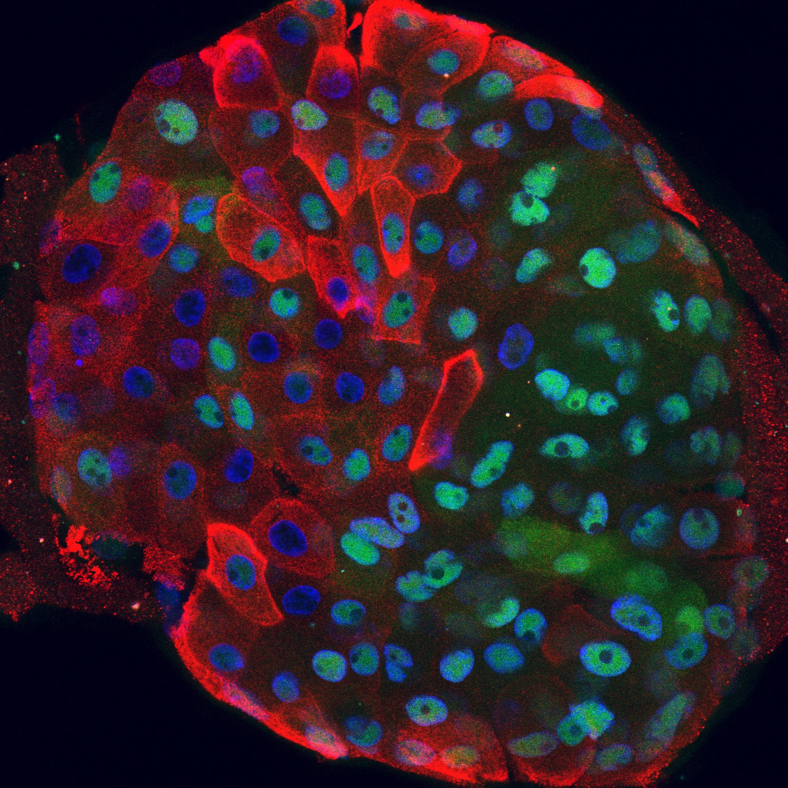
Patient derived bladder cancer organoids
The main goal of our group’s bladder cancer research is to develop complex bladder cancer patient-derived organoid-tumoroid 3D (immune- co-) cultures, which can then be used to interrogate and predict patient-response to various types of therapeutics, including immune therapies (1). In addition, these organoids can be used as unbiased approaches to identify molecular signatures for disease progression as well as molecular targets for precision therapeutics and treatment selection (2). Finally, we employ these patient-derived platforms to understand the molecular mechanisms that drive the pathogenesis of bladder cancer, focusing on alterations in chromatin regulatory genes (3).